- Written by: admin
- January 27, 2025
Innovation in Farming: The Power of Drip Irrigation
Access to water remains one of the biggest challenges facing smallholder farmers in Uganda. With increasingly unpredictable rainfall and longer dry seasons, many farmers struggle to maintain consistent crop production. Traditional irrigation methods are often inefficient, costly, or simply inaccessible to rural communities.
The Youth Initiative for Community Empowerment (YICE Uganda) is addressing this challenge by introducing low-cost, practical irrigation solutions that are tailored to local conditions. Among these, drip irrigation has emerged as a powerful tool for improving water efficiency and boosting agricultural productivity.
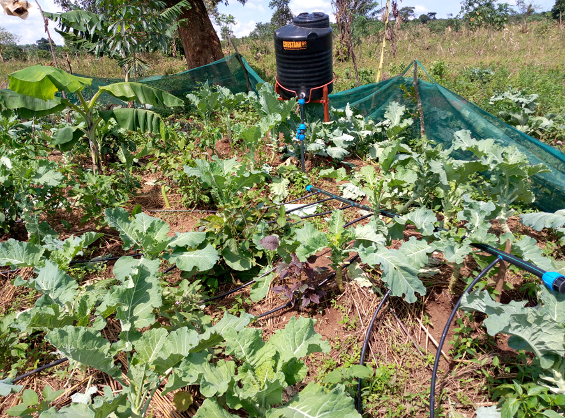
Drip irrigation works by delivering water directly to the base of plants through a network of pipes or tubes. This targeted approach minimizes water loss caused by evaporation or runoff, ensuring that crops receive the right amount of moisture exactly where it is needed. As a result, farmers can achieve better yields while using significantly less water.
YICE Uganda promotes simple and affordable drip irrigation systems that can be assembled using locally available materials. Farmers are trained not only in installation but also in maintenance and efficient water use. This makes the technology accessible even to those with limited financial resources.
The benefits extend beyond water conservation. With reliable access to moisture, farmers are able to grow crops throughout the year, including during dry seasons when production would typically decline. This leads to more stable incomes and improved household food security.
In addition, drip irrigation supports the adoption of other sustainable practices such as kitchen gardening and crop diversification. Farmers can cultivate a wider variety of crops, including vegetables and fruits, which contribute to better nutrition and increased market opportunities.
Through the introduction of practical innovations like drip irrigation, YICE Uganda is helping farmers move from subsistence to more productive and resilient agricultural systems. These solutions demonstrate that even small changes in technique can have a significant and lasting impact on rural livelihoods.